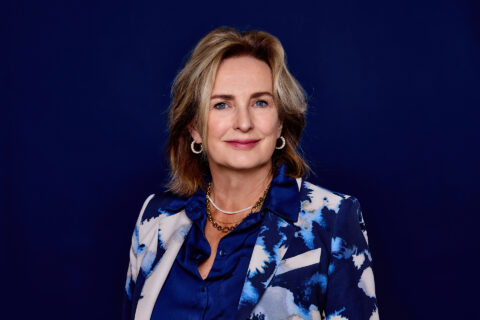
Carina Hilders believes that amid all the AI and technical innovation, we must not forget the human element. If we do, AI and medtech can play a vital role in keeping healthcare healthy well into the future.
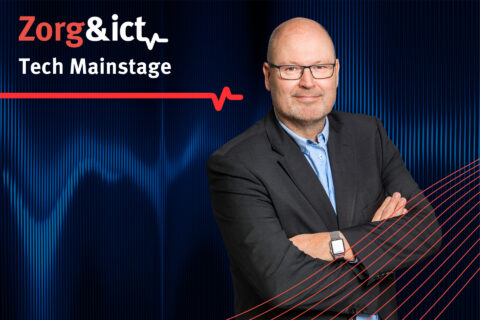
Carina Hilders was the first speaker on the tech mainstage of Zorg & ict on Tuesday, April 8. Her keynote on "future-proof care" had a positive message, she announced beforehand. "AI and medtech are going to help us tremendously to keep healthcare healthy in the future. It's the pipeline we should be fully committed to. Centuries ago, the invention of sewers contributed to health as a side benefit. Everyone thought: it stinks here, we have to do something about that. But everyone became much healthier and certain diseases no longer occurred. So medtech infrastructure is going to help us keep healthcare healthy in the future."
Principle of Solidarity
Because something urgently needs to be done, says the chair of the board of directors at UMC Utrecht. The principle of solidarity as the foundation of healthcare in the Netherlands is under pressure. “Unfortunately, we see a life expectancy gap of nearly seventeen years, and it’s still growing. If you’re born in a disadvantaged neighborhood, you’ll live that many years less in the Netherlands.” According to Hilders, the primary task is therefore to achieve and safeguard equity and accessibility in healthcare.
Collaboration and Connection
That’s not just a task for the healthcare sector, she explains. “This is a responsibility shared by many. It’s about housing, debt relief, healthy living, behavior, and education. We’re all responsible for this together, although we in the healthcare sector may take it for granted a bit more.”
She therefore advocates for collaboration and connection across different sectors, disciplines, and fields of expertise. “If we want to ensure that people stay healthy for as long as possible and that there is equality in access to care, we must take an interdisciplinary approach. I see many opportunities here for an integrated and shared data infrastructure, AI, and other medical technological developments.”
More than Just Process Optimization
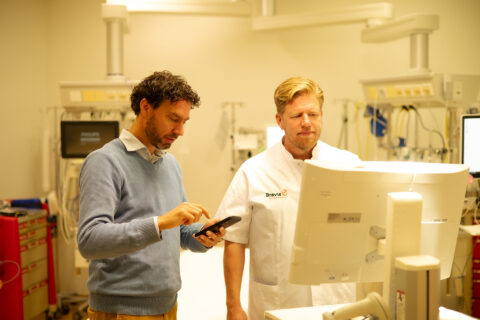
Initially, Hilders is thinking of supporting professionals in easing administrative tasks, writing discharge letters or writing along during a consultation. This allows for more human contact. "Or predicting no-shows with AI, generating results, all fantastic initiatives that contribute to solving where things are pinching now."
But the possibilities go beyond these specific process optimizations. Consider, for example, therapy and lifestyle support, remote support and diagnostics, or making predictions about at-risk population groups and anticipating their needs. “At UMC Utrecht, we conduct a lot of research in vulnerable neighborhoods in Utrecht: how can we reach people, and what can we improve there?”
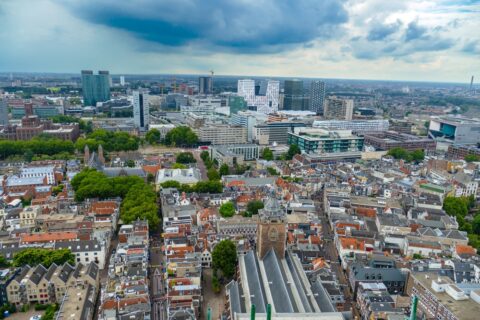
UMC Utrecht has the ambition to be both a leader and a leader in the data structure and AI changes that are needed, says Hilders. "I have only been here for six months, but I am genuinely impressed every day with everything that happens here. This is really a very ambitious institution."
Knowledge, Innovation, and Commercialization
As an example, she cites the 3AI approach, an approach to AI that is about integrating Data, Research and Implementation (DRI), for safe and proper use of AI in healthcare. "How can we use data to optimize processes and optimize quality? There are already a dozen AI labs working on that, working with the university and other partners at the Utrecht Science Park. Because this is a fantastic square kilometer where there is a lot of knowledge and innovation and valorization taking place. If you deploy this kind of thing well and are constantly working on it, you can call yourself a leader. And we take direction in the good sense of the word: showing what can be done and sharing it, so that you can roll it out with colleagues in regional and national networks."
Human scale
At the event focused on ICT and technological innovation, Hilders delivered a striking closing message: “I think the most important thing is that we maintain the human touch in everything we can. At an event like this, you’re tempted by technology, by numbers, by data, by the fantastic visions of the future. There will undoubtedly be a few robots walking around. But the core of healthcare—I started out as a gynecologist and, in fact, I still am—is to always stay focused and ask: will this benefit the patient? Healthcare is still all about a human approach, even when it’s supported by AI.”
This is an article by Dutch Health Hub. Want to keep up with all the news from the healthcare industry? Then take a look at the hub and sign up for the weekly newsletter.
↗